
 admin
admin
Effective people management is crucial for the success of any organization. However, many SMEs and growing enterprises in India and beyond still struggle with HR management, relying heavily on spreadsheets, manual payroll processes, and compliance issues that divert time from strategic people management.
This is where Human Resource Management System (HRMS) software becomes essential. By 2026, HRMS platforms will have significantly advanced beyond basic payroll functions. Today’s best HR software offers a comprehensive, cloud-based system that integrates key functionalities, including recruitment, digital onboarding, attendance tracking, performance evaluation, compliance management, and workforce analytics, all within a single solution.
With numerous platforms vying for attention, how do you determine which HRMS software is truly suitable for your organization? This guide streamlines the selection process. We have thoroughly researched and evaluated the top 10 HRMS solutions for SMEs and enterprises in 2026, beginning with our top choice, Arriba HRMS, and including nine other leading platforms tailored to different business sizes and requirements.
Whether you’re a small startup with 15 employees in a tier-2 city or a large enterprise with 5,000 staff members across multiple locations, this guide will help you find the right solution.
If you are still handling HR using spreadsheets, you are not only lagging behind but also introducing risks to your organization. Here’s why businesses of all sizes need to invest in appropriate HR software.
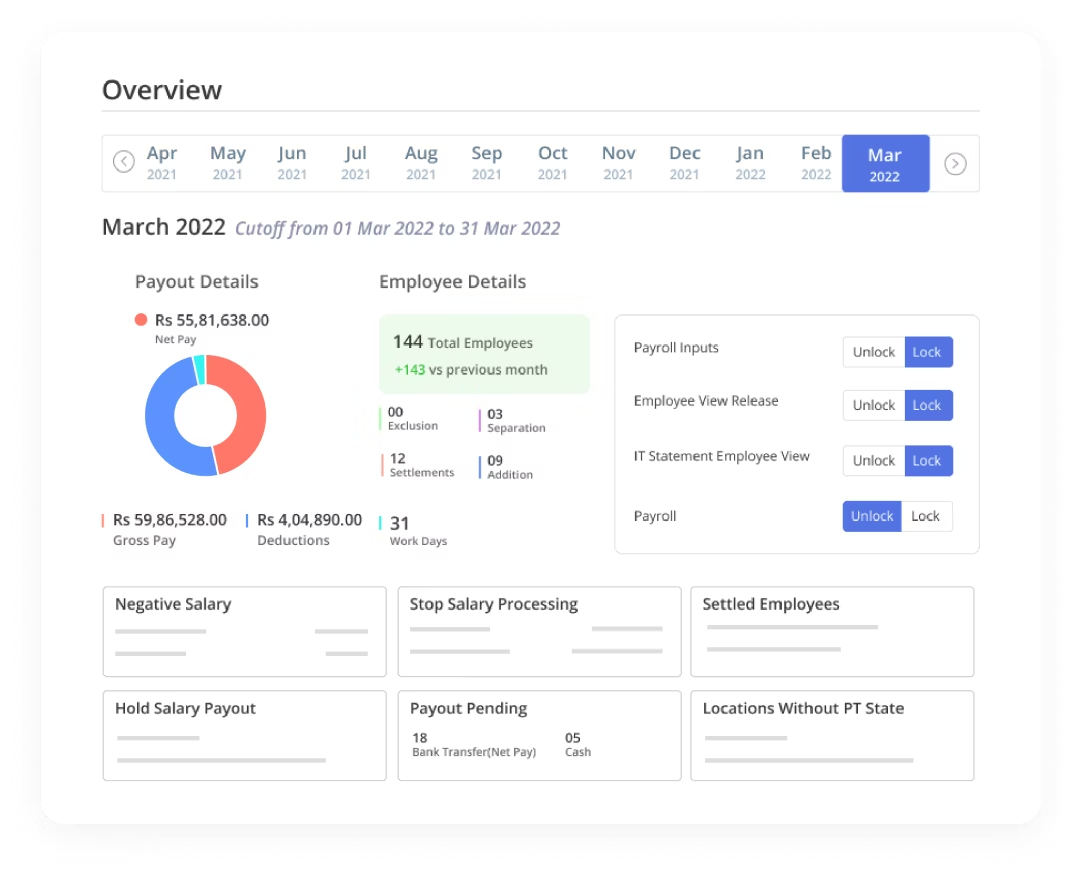
Ensuring payroll accuracy and compliance is no longer a choice. Indian labor laws require businesses to keep up with PF, ESI, Professional Tax, TDS, and gratuity calculations, which frequently change. A calculation error can lead to penalties, employee dissatisfaction, or potential legal issues. The most effective HRMS software automates these calculations and generates statutory reports, keeping you ready for audits at any time.
The complexity of the workforce has increased significantly. By 2026, most organizations will manage a combination of full-time employees, remote workers, field staff, contract employees, and hybrid teams spread across various locations. Manual tracking of attendance and leaves simply cannot keep up with this level of complexity. Cloud-based HR software equipped with mobile applications, GPS-based attendance tracking, and geofencing ensures you always know who worked where and when, without needing to follow up with team leaders for manual updates.
The administrative workload is unmanageable without automation. HR teams typically spend about 40-60% of their time on repetitive administrative duties, such as generating payslips, approving leave requests, updating employee records, and responding to basic employee inquiries. HRMS software streamlines these processes, allowing HR professionals to focus on higher-value initiatives such as talent development, organizational culture building, and workforce planning.
Data-driven human resources management is becoming the new competitive edge. Organizations that utilize HRMS analytics to assess attrition risk, monitor performance trends, and optimize workforce costs tend to outperform those that rely solely on intuition. Real-time dashboards and customizable reporting tools available in modern HRMS platforms provide HR leaders with the insights necessary to make proactive decisions.
Employee experience plays a crucial role in retention. Employee self-service portals, digital onboarding processes, recognition mechanisms, and user-friendly mobile applications all enhance the overall employee experience. In a competitive job market, this directly affects retention, and businesses that invest in HR technology that employees find enjoyable to use gain a significant advantage.
Before selecting a platform, it is important to understand the essential distinction between the two deployment models and the reasons for the noticeable shift in the market.
Cloud-based HRMS is hosted on the vendor’s servers and can be accessed via a browser or a mobile application. You pay a subscription fee (typically calculated per employee each month), and the vendor is responsible for all software updates, data backups, security patches, and infrastructure maintenance. The setup process is quick, often taking days rather than months, and your team can use the system from any location on any device.
An on-premises HRMS is installed on your organization’s servers. You pay a one-time licensing fee along with ongoing maintenance expenses, and your IT department manages updates, backups, and security. Although customization can be more extensive, the total cost of ownership is considerably higher, and deployment periods are significantly longer.
For the overwhelming majority of SMEs in 2026, cloud-based HR software is clearly the preferred choice. It does not require any initial hardware investment, scales easily as your workforce expands, and keeps your team connected whether they are in the office, remote, or in the field. Additionally, it generally provides quicker vendor support, regular feature updates, and superior mobile functionality.
On-premise solutions may still be suitable for very large corporations that have specific data sovereignty needs, intricate custom integrations, or sectors with stringent regulatory limitations on data leaving their internal systems. For everyone else, the cloud should be the standard option.
Selecting an HRMS is a decision that you’ll live with for a long time, and making the wrong choice can lead to migration challenges, user dissatisfaction, and decreased productivity. Use this checklist to assess any platform before committing to it.
Begin by clearly defining your essential requirements. Start by compiling a list of HR functions you need to automate immediately, such as payroll, attendance, leave management, onboarding, and performance evaluations. Not every business requires every module from the outset, and investing in features you won’t utilize is inefficient.
Examine the depth of payroll and compliance features. If your operations are in India, specifically look for support related to PF, ESI, PT, TDS, and gratuity. Ensure that the platform can automatically produce e-filing outputs and keep up with regulatory updates.
Evaluate the scalability of the system. Your HRMS should evolve alongside your business. Inquire with vendors about how the platform accommodates multi-location operations, large workforces, and intricate organisational structures. A system suited for 50 employees should equally be effective for 500.
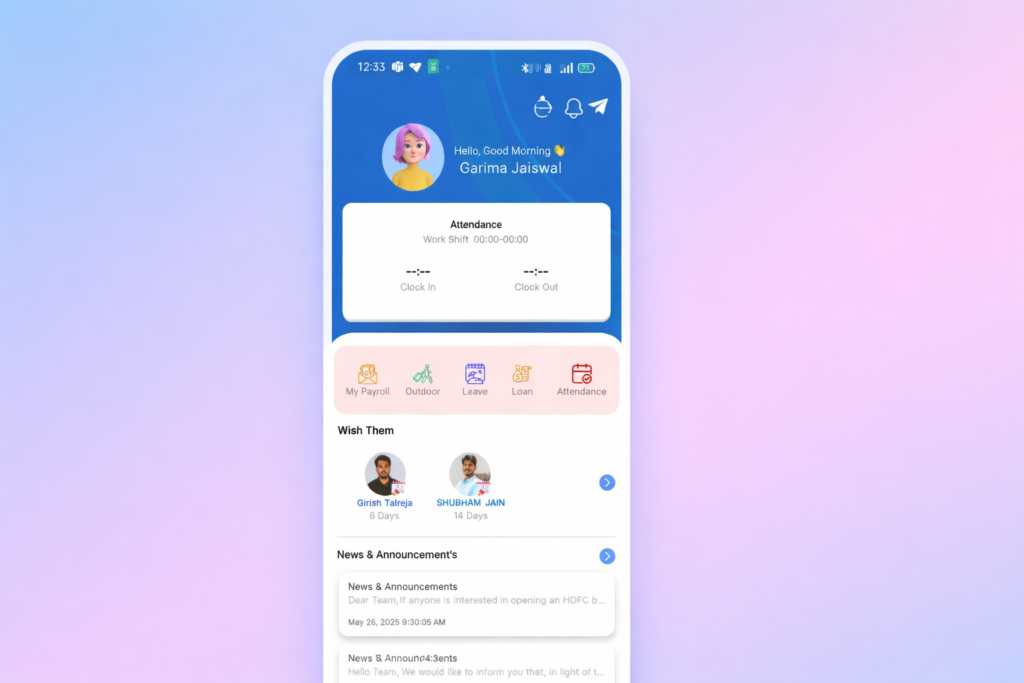
Examine the mobile functionality. With hybrid and remote work becoming commonplace, your HRMS must operate smoothly on mobile devices. Look for features such as GPS-based attendance, mobile leave approvals, and employee self-service options that work independently of a desktop.
Assess the ability to integrate. Your HRMS will not function in isolation. Ensure it integrates with your accounting software, biometric devices, ERP systems, and any other tools your organization depends on.
Comprehend the overall cost of ownership. Aside from the per-employee subscription price, inquire about implementation costs, onboarding support expenses, data migration fees, and additional module charges. Some vendors may promote low base rates but impose high fees for necessary add-ons.
Examine the quality of support. Verify whether the vendor provides dedicated implementation assistance, a help desk, a knowledge base, and training materials. Insufficient onboarding support is a leading reason for the failure of HRMS implementations.
Give priority to data protection. Ensure that the platform employs encryption for both stored and transmitted data, provides role-based access controls, and adheres to applicable data protection regulations.
Ask for a free trial or demonstration. The best way to properly assess usability is to interact with the product. Most reputable HRMS providers offer free trials or live demos; make sure to take advantage of these before committing to any agreement.
Small and mid-sized businesses have different priorities than large enterprises. While enterprises often prioritise advanced talent management and predictive analytics, SMEs need a platform that is fast to implement, affordable to maintain, and easy for non-technical HR staff to operate. Here are the features that matter most for growing businesses.
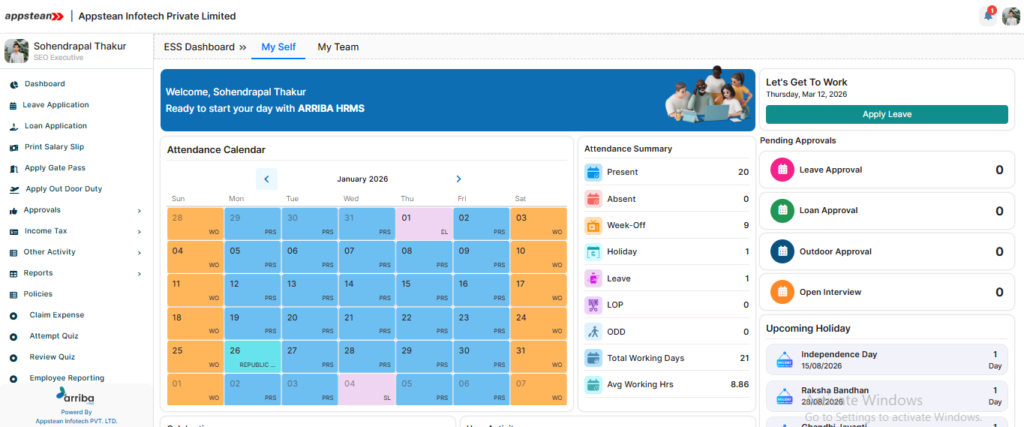
Arriba HRMS, created by Appstean Infotech Pvt. Ltd., is a fully-featured, cloud-based Human Resource Management System designed for businesses of various sizes, from fledgling startups to large corporations. Specifically designed to meet international compliance standards, Arriba combines user-friendliness with a comprehensive suite of features spanning the entire employee journey, from recruitment and onboarding to payroll processing and performance management.
What distinguishes Arriba is its focus on simplicity while still providing depth: it is crafted to be user-friendly for non-technical HR staff yet offers the automation and analytics functionalities that growing enterprises require to expand. With a 15-days free trial, clear pricing, and dedicated customer support, Arriba HRMS is an outstanding option for SMEs looking to enhance their HR functions without the burden of a steep learning curve or high upfront cost.
Key Features:
Best For: SMEs, startups, and large organizations looking for a user-friendly, all-in-one HRMS with robust support for Indian compliance, rapid implementation, and economical per-user pricing.
Pricing: Basic plan starts at ₹79 per user per month | Standard plan begins at ₹119 per user per month | Enterprise pricing available upon request
greytHR is one of India’s most widely used comprehensive HRMS platforms, with trust from over 30,000 firms across more than 25 countries. Initially developed as payroll software, it has transformed into an all-encompassing HR platform that addresses the entire employee lifecycle. Its key features are precise payroll processing, adherence to statutory regulations, and a strong suite of attendance and leave management tools suitable for both small and large businesses.
Key Features:
Best For: Small and medium-sized enterprises, as well as large companies seeking a proven, comprehensive HRMS with strong payroll and compliance capabilities.
Pricing: Begins at ₹3,495/month | Free trial available.
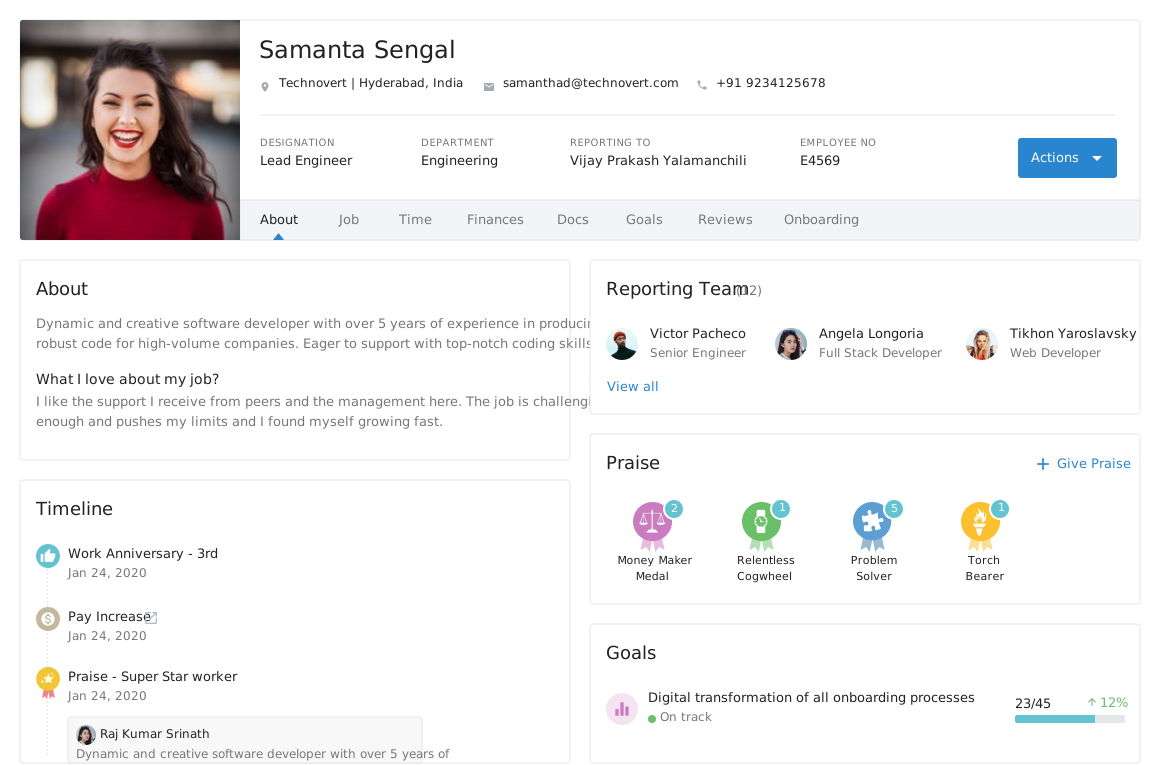
Keka is a contemporary, employee-focused HRMS recognized for its sleek interface and gamified approach to attendance tracking and engagement. It integrates payroll, HR, performance management, and time tracking into a single platform, making it especially favored by tech firms and rapidly expanding companies that focus on enhancing the employee experience and operational effectiveness.
Key Features:
Best For: Medium-sized companies looking for a unified, contemporary HR and payroll solution with robust employee engagement functionalities.
Pricing: Customized pricing, contact vendor | No free trial.
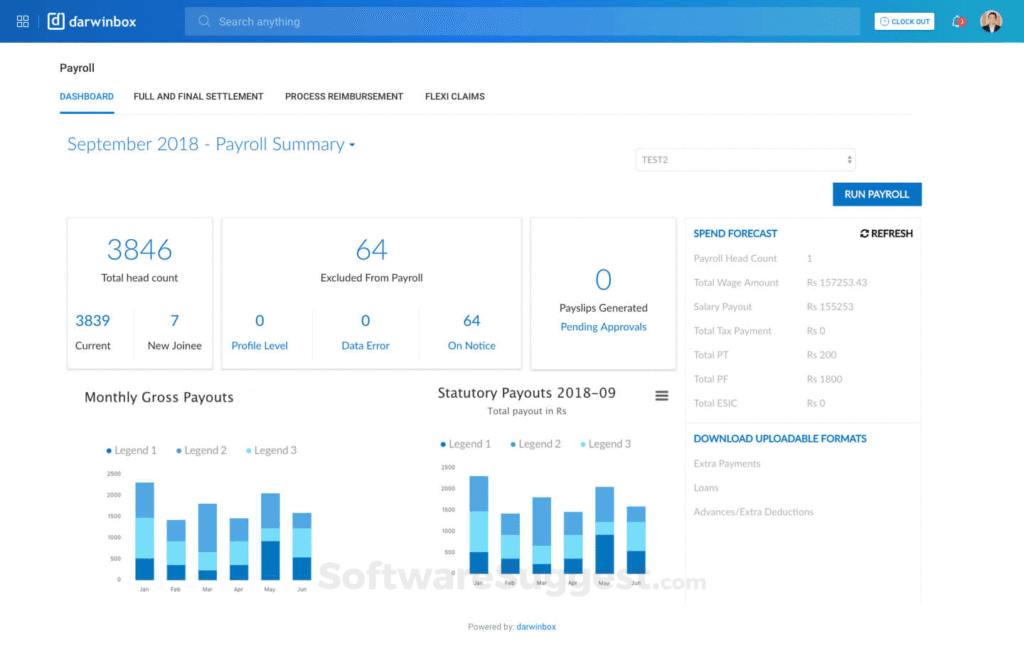
Darwinbox is an enterprise-level HRMS designed for large organizations that require sophisticated talent management, AI-driven analytics, and a mobile-first experience for employees. Acknowledged by Gartner and utilized by various Fortune 500 companies in Asia, Darwinbox provides a state-of-the-art HR platform that extends well beyond basic HR management.
Key Features:
Best For: Large corporations in search of a modern HRMS with superior talent management, workforce capabilities, and AI-based analytics features.
Pricing: Customized pricing, contact vendor | No free trial.
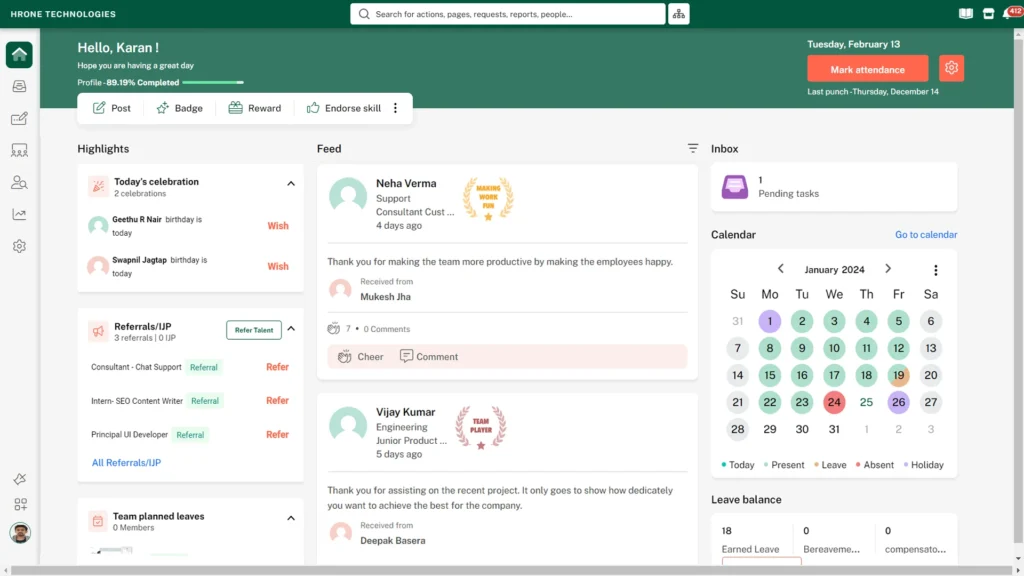
HROne is a cloud-based Human Resource Management System (HRMS) that offers a wide range of modules covering payroll, attendance, performance, training, and recruitment, all on a highly adaptable, user-friendly platform. Its primary advantage is in automating workflows and utilizing geofencing for attendance tracking, making it particularly suitable for organizations with remote or field-based teams.
Key Features:
Best For: Companies requiring thorough HR management across payroll, attendance, recruitment, training, and performance with flexible pricing options.
Pricing: Starting at ₹4,950/month | No free trial
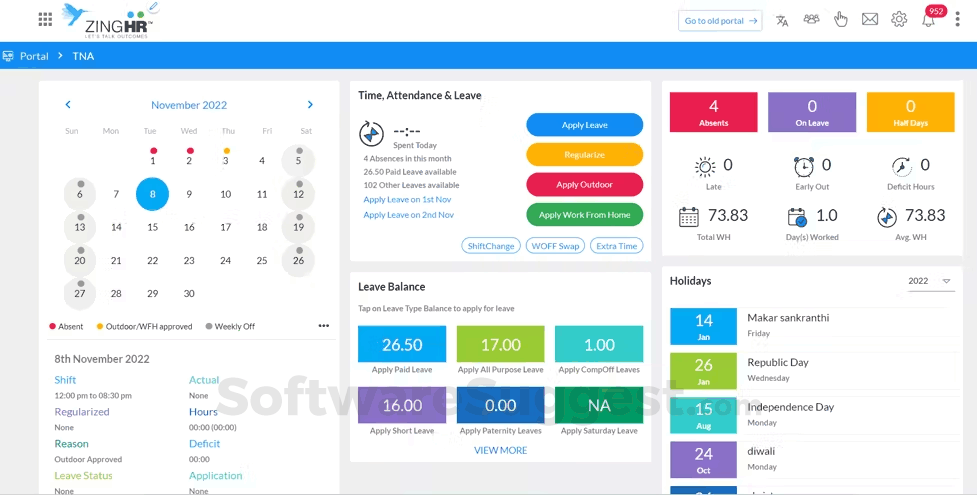
ZingHR is an AI-powered HRMS platform that has received recognition from Gartner for its customer satisfaction. Featuring over 30 modules, it offers one of the most comprehensive collections of features, covering talent acquisition, talent management, global payroll, and sophisticated engagement tools. This platform is especially beneficial for large enterprises operating in various locations.
Key Features:
Best For: Large organizations in need of an HRMS with advanced talent management, global payroll capabilities, and AI-enhanced engagement tools.
Pricing: Customized pricing, reach out to the vendor | No free trial
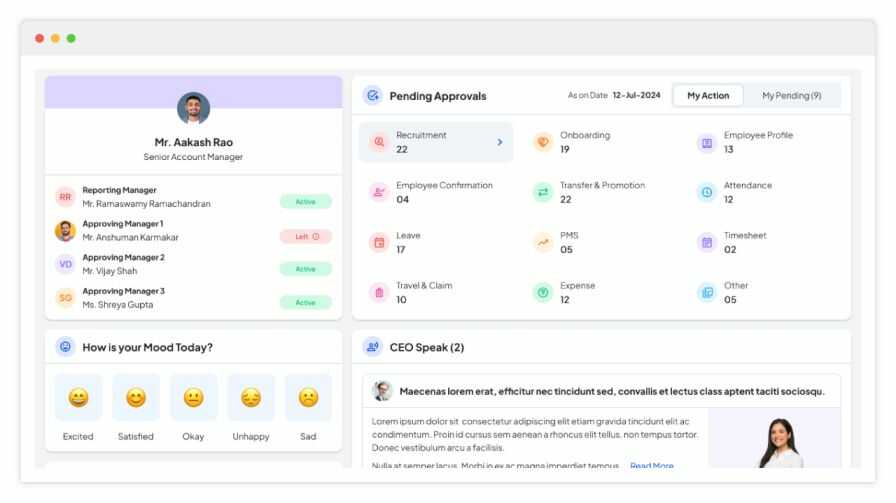
FactoHR is a flexible HRMS and payroll platform employed by more than 3,500 companies throughout India. Its appeal lies in its all-inclusive feature set at a reasonable price, making it an attractive choice for mid-sized businesses seeking enterprise-grade functionality without the associated costs. The attendance module is particularly well-regarded for its biometric integration and geofencing features.
Key Features:
Best For: Companies looking for a comprehensive HRMS with robust payroll, attendance, and performance modules at a competitive rate.
Pricing: Starting at ₹4,999/month | No free trial
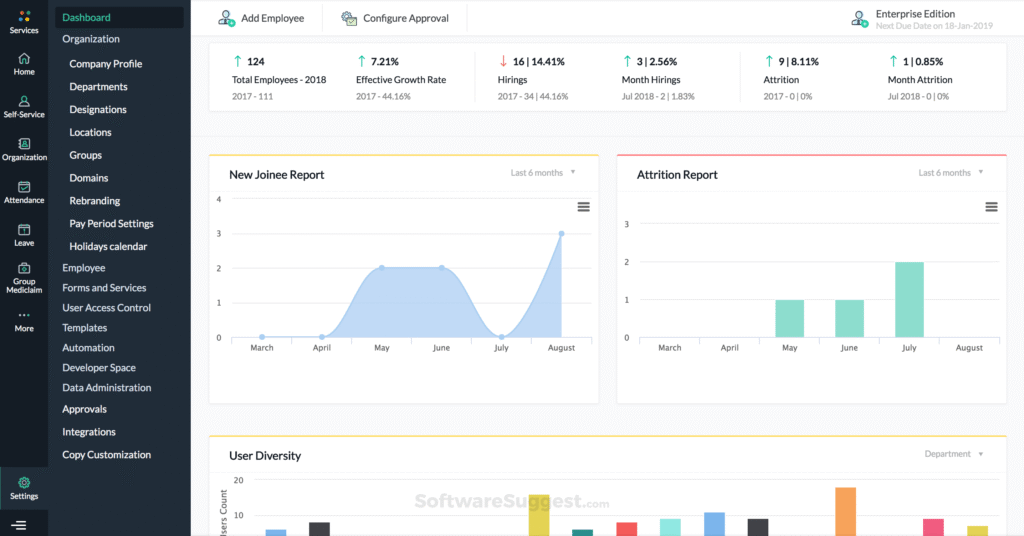
Zoho People is a component of the larger Zoho ecosystem and provides a flexible, modular HRMS solution suitable for businesses of various sizes. Its key strength is seamless integration with other Zoho products, such as Zoho Payroll, Zoho Recruit, and Zoho Books, making it an ideal choice for organizations already using the Zoho suite. Additionally, it is highly customizable, featuring extensive workflow automation and support for multiple languages.
Key Features:
Best For: Businesses of all sizes looking for a modular, cloud-based HRMS with robust integration within the Zoho ecosystem.
Pricing: Starting at ₹5,500 per month | Free trial is available
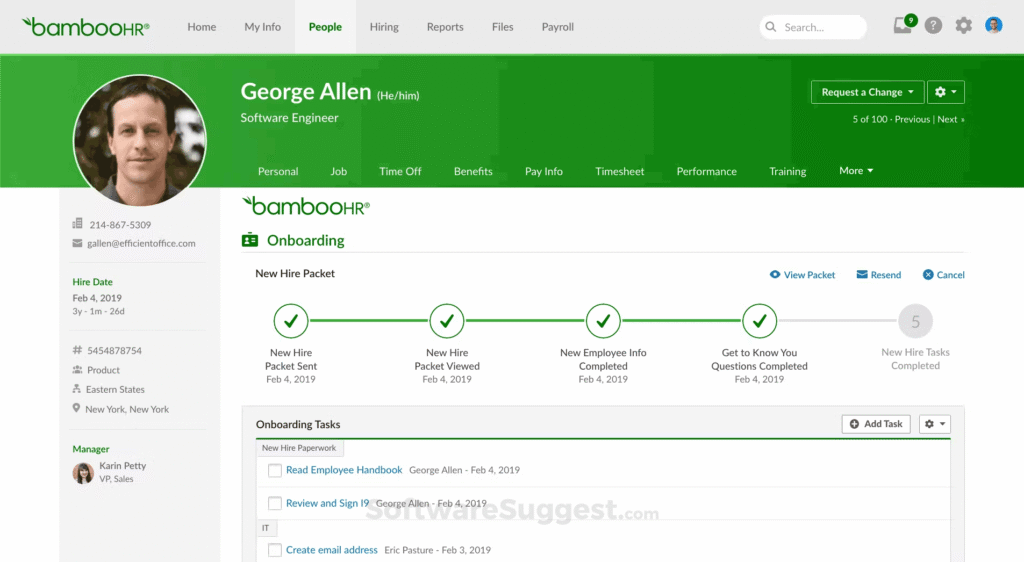
BambooHR is a well-known HRMS platform recognized worldwide, primarily serving small to mid-sized businesses. Its most notable feature is its outstanding user experience, which is often cited as one of the easiest HRMS platforms to adopt and operate, even without specific HR technology knowledge. Although its compliance features specific to India are somewhat limited compared to locally developed platforms, it remains a strong choice for international companies or India-based organizations collaborating with global teams.
Key Features:
Best For: Small to mid-sized businesses, especially those with international or globally focused teams, seeking a user-friendly HRMS with excellent self-service and onboarding functionalities.
Pricing: Custom pricing, reach out to the vendor | Free trial is available
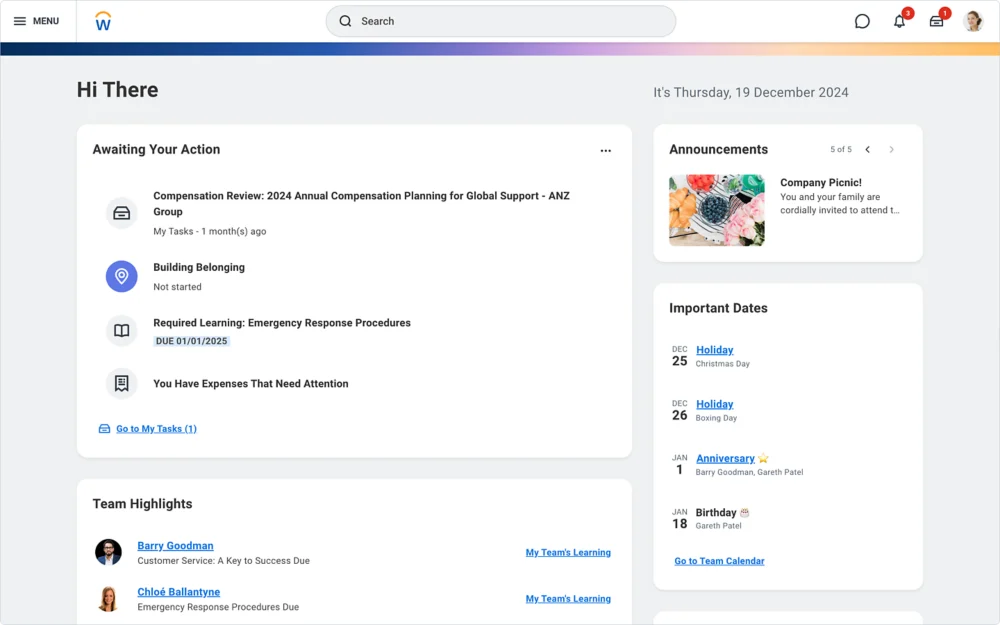
Workday HCM sets the benchmark for enterprise-level human capital management. It delivers a consolidated platform that integrates HR, payroll, finance, and workforce planning into a single system, powered by advanced AI-driven analytics that offer exceptional visibility into workforce expenses, performance patterns, and talent-related risks. It is tailored for large, intricate organizations and is priced accordingly.
Key Features:
Best For: Large enterprises and organizations making the transition from small and medium-sized enterprises to larger scales, looking for a comprehensive, integrated HCM platform with advanced analytics and global functionality.
Pricing: Custom pricing, contact the vendor | No free trial available
Tool | Price per Month | Free Trial | Best For |
Arriba HRMS | From ₹79/user | ✅ Yes (15 days) | SMEs, startups, and large organizations are looking for a user-friendly, all-in-one HRMS with robust support for Indian compliance, rapid implementation, and economical per-user pricing. |
greytHR | From ₹3,495 | ✅ Yes | Small and medium-sized enterprises, as well as large companies, are seeking a proven, comprehensive HRMS with strong payroll and compliance capabilities. |
Keka HR | Custom | ❌ No | Medium-sized companies looking for a unified, contemporary HR and payroll solution with robust employee engagement functionalities. |
Darwinbox | Custom | ❌ No | Large corporations are seeking a modern HRMS with superior talent management, workforce capabilities, and AI-based analytics. |
HROne | From ₹4,950 | ❌ No | Companies requiring thorough HR management across payroll, attendance, recruitment, training, and performance, with flexible pricing options. |
ZingHR | Custom | ❌ No | Large organizations in need of an HRMS with advanced talent management, global payroll capabilities, and AI-enhanced engagement tools. |
factoHR | From ₹4,999 | ❌ No | Companies are looking for a comprehensive HRMS with robust payroll, attendance, and performance modules at a competitive rate. |
Zoho People | From ₹5,500 | ✅ Yes | Businesses of all sizes are looking for a modular, cloud-based HRMS with robust integration within the Zoho ecosystem. |
BambooHR | Custom | ✅ Yes | Small to mid-sized businesses, especially those with international or globally focused teams, are seeking a user-friendly HRMS with excellent self-service and onboarding functionalities. |
Workday HCM | Custom | ❌ No | Large enterprises and organizations transitioning from small- and medium-sized enterprises to larger scales are looking for a comprehensive, integrated HCM platform with advanced analytics and global functionality. |
The landscape of HRMS is evolving at an unprecedented pace. Here are the crucial trends influencing the future of HR software.
AI is transitioning from a trendy concept to a fundamental element. By 2026, AI in HR will extend beyond chatbots and search. Leading HRMS platforms will incorporate AI into processes like attrition forecasting, performance evaluation, interview screening, and workforce planning. Insights driven by AI will assist HR leaders in making proactive choices, identifying employees at risk, highlighting compliance issues, and suggesting optimal actions, rather than responding only after challenges arise.
Skills-based talent management is taking precedence over traditional role-based methods. Instead of simply categorizing employees by job title or department, innovative organizations are developing skills inventories within their HRMS to enhance internal mobility, recommend learning opportunities, and plan for succession. HRMS platforms that facilitate skills mapping and career-path exploration are gaining considerable popularity.
The concept of employee experience is emerging as a product category in its own right. The distinctions between HRMS, engagement tools, and internal communication applications are becoming less clear. By 2026, top-tier HR software will be designed with employees, not just HR managers, as the primary users. Features such as personalized dashboards, in-app recognition, feedback prompts for managers, and wellness tracking are becoming standard expectations on contemporary platforms.
A mobile-first approach is now essential. With distributed and hybrid workforces becoming commonplace, HRMS platforms that lack full mobile functionality are quickly falling behind. Advanced features such as offline attendance tracking, mobile document signing, and voice-activated HR inquiries are setting apart industry leaders from those lagging.
The automation of compliance is increasingly deepening. As labor laws in India and worldwide grow more intricate and enforcement becomes stricter, HRMS vendors are investing significantly in automated compliance systems that continuously adapt to regulatory changes in real time, alleviating HR teams’ workload and reducing the risk of costly mistakes.
The field of HR analytics is evolving toward predictive analytics. Predictive and prescriptive analytics tools are replacing traditional static reporting dashboards. Leading HRMS platforms now provide headcount forecasting, compensation benchmarks, and retention probability metrics, allowing HR leaders to plan rather than simply report on past events.
Selecting the appropriate HRMS software is more than just an upgrade in operations; it represents a strategic commitment to your organization’s potential for growth, maintaining compliance, and keeping the talent that drives that growth. As discussed throughout this guide, the leading HR software of 2026 transcends mere payroll processing. The behind-the-scenes tasks are fortive tasks that hinder your HR department from providing employees with a smooth self-service experience, allowing them to make decisions directly.
Whether you are a small or medium-sized enterprise embarking on your journey toward HR automation or a large organization seeking to integrate various HR tools into one cohesive platform, there’s a solution on this list tailored to meet your current needs and future aspirations. For many expanding businesses in India, Arriba HRMS delivers the best blend of affordability, user-friendliness, compliance with Indian regulations, and scalability, making it an ideal starting point.
However, no matter which platform you eventually select, the key first step is to move away from spreadsheets, invest in the right system, and equip your HR team with the tools to perform at their best.
HRMS, which stands for Human Resource Management System, is a software solution that consolidates and automates essential HR tasks, including payroll management, attendance tracking, leave oversight, employee record keeping, recruitment, onboarding, performance evaluation, and compliance reporting, all within a unified system. Contemporary HRMS solutions are typically cloud-based and can be accessed from any device.
While these terms are frequently used interchangeably, there are slight differences between them. HRIS (Human Resource Information System) refers to the database component that stores employee information. HRMS encompasses this by integrating process automation for functions such as payroll, attendance, workflows, and compliance. HCM (Human Capital Management) is the most comprehensive term, encompassing everything in HRMS, as well as strategic talent management aspects such as learning and development, succession planning, workforce analytics, and talent acquisition.
For small and medium-sized enterprises (SMEs) in India, we recommend Arriba HRMS as the top choice in 2026. It offers cost-effectiveness (beginning at ₹79/user/month), automated compliance with Indian regulations, mobile-first capabilities, and a user-friendly design, making it suitable for businesses ranging from startups to mid-sized firms. Other strong alternatives include greytHR and Keka HR, depending on your specific needs.
In most cases, the answer is affirmative. Cloud-based HRMS systems provide quicker deployment, lower initial costs, automatic updates, superior mobile access, and simplified scalability. On-premise options might be suitable for exceptionally large organizations with unique data-sovereignty or heavy customization needs, but such scenarios are becoming less common.
HRMS costs in India usually follow a per-employee, per-month pricing structure. Entry-level plans may start as low as ₹79/user/month (for Arriba HRMS), whereas comprehensive platforms like greytHR begin around ₹3,495/month for a defined number of employees. Enterprise solutions such as Darwinbox, ZingHR, and Workday implement customized pricing based on employee count and features selected.
The critical features for a business in growth mode include payroll automation with statutory compliance, attendance and leave management with mobile access, digital onboarding processes, an employee self-service portal, basic performance management capabilities, and HR analytics dashboards. As the business expands, additional functionalities such as recruitment management, advanced performance modules, and learning management can be incorporated.
Yes, as long as you select a platform specifically designed for India. Solutions like Arriba HRMS, greytHR, Keka, HROne, and factoHR are tailored to manage PF, ESI, Professional Tax, TDS, and gratuity calculations in line with Indian labour laws, including automated outputs for e-filing.
Definitely, contemporary cloud-based HRMS systems are specifically built for distributed teams. Features such as GPS-enabled attendance, geofencing, mobile self-service interfaces, and digital document management ensure that, regardless of function, they operate smoothly, no matter where employees are located.
The implementation duration depends on the platform and the business's complexity. For small to medium-sized enterprises using cloud-based solutions like Arriba HRMS or greytHR, basic implementation may take just a few days to some weeks. On the other hand, enterprise-level platforms such as Darwinbox or Workday may need several months for implementation, configuration, and transition management.
Most reliable HRMS systems offer trial periods rather than permanently free versions. ArfullS offers a 30-day free trial with full feature access. greytHR and Zoho People also provide trial periods. It is uncommon to find full-suite HRMS software that is permanently free, and such plans usually come with considerable feature restrictions.
Payroll software is focused solely on aspects such as salary calculations, tax deductions, payslip generation, and compliance filings. HRMS software encompasses payroll functions and extends to cover the entire employee lifecycle, including recruiting, onboarding, performance management, learning, and offboarding. If your business only requires payroll automation, a dedicated payroll tool may be sufficient. However, if you seek comprehensive HR management, investing in a complete HRMS is the preferred choice.
Most HRMS providers offer data migration assistance as part of their onboarding process. Generally, you will export your employee information from spreadsheets, clean and format it to align with the platform's requirements, and then import it into the HRMS. Leading providers often have dedicated implementation teams or consultants to help you through the migration, reducing the chances of data loss or errors.
Yes, most HRMS solutions tailored for the Indian market, such as Arriba HRMS, greytHR, Keka, factoHR, and HROne, are compatible with popular biometric attendance systems, hardware-generated data, and hardware improvements to the HRMS, reducing manual entry and ensuring payroll accuracy.
In addition to features, consider vendor and implementation support quality, customer service, security, product update frequency, security certifications, user reviews, and transparency in pricing. A platform with great features but inadequate implementation support will not deliver a return on investment. Always ask for references from businesses of similar size and industry before making a decision.
Without HRMS software, businesses encounter multiple significant risks: errors in payroll and failure to comply with regulations leading to financial penalties; loss of employee trust due to incorrect payslips or slow processing; potential data security issues from keeping sensitive employee data in unsecured spreadsheets; challenges in scaling HR operations as the workforce expands; and a disadvantage in recruiting and retaining talent when compared to companies that provide a modern, digital employee experience.